
Top 5 Rwanda destinations: Nicknamed the Land of a Thousand Hills, Rwanda has spent three decades turning devastation into one of the continent’s most remarkable stories of renewal by restoring its forests, rebuilding its wildlife populations, and strengthening its communities. Every safari, hike, and city stroll here carries that story forward. When you choose to explore Kigali’s streets, track gorillas through misty volcano slopes, visit Lake Kivu, track chimpanzees through ancient rainforest, or search for the Big Five mammals in Akagera, you are not just sightseeing; you are taking part in a living conservation success story. This guide explores Rwanda’s five signature destinations – Volcanoes, Akagera, Nyungwe National Park, Lake Kivu, and Kigali City – to help you see how each fits into the journey you want to take.
List of Top 5 Rwandan Destinations
Volcanoes National Park
Located in Rwanda’s northwest, along the border with Uganda and the DR Congo, Volcanoes National Park is part of the Virunga Massif, a chain of 8 volcanoes, of which four, including Karisimbi, the tallest, along with Bisoke, Gahinga, and Muhabura, sit inside the park. Their slopes are covered by dense montane forest, bamboo groves, Hagenia-Hypericum woodland, and open moorland that merges into alpine vegetation at the summits. This habitat supports rich biodiversity, including over 150 recorded bird species, playful troops of golden monkeys, and the endangered mountain gorillas, the park’s main attractions.
A gorilla trekking permit offers a full hour spent with a wild gorilla family, watching silverbacks, mothers, and infants go about their daily lives, feeding and grooming each other. Getting to see gorillas can be physically challenging due to the nature of the terrain, as trails climb through thick vegetation and steep volcanic slopes. In addition to gorilla trekking, the park offers golden monkey tracking through the bamboo forest, a hike to the tomb of primatologist Dian Fossey, whose research put these gorillas on the world’s conservation map, and full or partial ascents to one of the volcanoes for those intending to enjoy spectacular views of the Virunga chain.
The Musanze area outside the park offers a wide range of activities for those intending to add a few extra days. At Gorilla Guardians’ Village (formerly Iby’Iwacu), former poachers turned conservationists, visitors can experience Rwanda’s rich cultural heritage through traditional dance, storytelling, and demonstrations of the skills and customs that shaped life around the volcanoes.
The twin lakes of Burera and Ruhondo, nestled between terraced hillsides, offer canoe trips, lakeside walks, cycling trails, and some of the most spectacular scenery in northern Rwanda. For birders looking for unique species outside the park, Rugezi Swamp, a protected Ramsar wetland northeast of the park, is one of the best sites in the country for spotting the rare Grauer’s swamp warbler along with a range of other wetland species, including the grey-crowned crane.
The Musanze Caves, a network of lava tunnels formed by ancient volcanic activity, offer an easy guided walk through cool, dark passageways that once sheltered local communities during conflict. Together, these attractions give visitors a reason to base themselves in Musanze for several days rather than passing through for a single gorilla trek. There’s a wide range of accommodation around the park, giving every kind of traveller a place to stay after a day on the trail.
Luxury lodges in Volcanoes
At the top end, luxury lodges such as Kwintonda Gorilla Lodge and Bisate Reserve, perched on the park’s edge, offer high-end amenities with fireplaces, spas, and butler service. A step down, a strong collection of midrange lodges and boutique guesthouses offers comfortable rooms, good food, and easy access to the park centre at Kinigi. For budget-conscious travellers, tented eco-camps and community-run guesthouses keep costs low while still delivering warm hospitality and proximity to the trailheads, and several of these lean into sustainable, low-impact design with solar power, local materials, and minimal water use. For travellers who want their stay to match the conservation story unfolding around the gorillas. Whatever the budget, visitors can find a place that suits them.
Akagera National Park
The only savanna protected area of Rwanda, Akagera, is located on the eastern edge along the Tanzanian border, and it’s defined by open rolling savanna, acacia woodland, papyrus swamps, and lakes that form one of Central Africa’s largest wetlands. The signature activities are classic game drives and boat safaris, through which you explore the great conservation story of the park. Lions and black rhinos disappeared due to rampant poaching, and encroachment reduced the park’s size from 2,500 to 1,122 sq. km. In 2015, dedicated reintroduction programmes brought both species back, restoring Akagera’s full Big Five status. The recovery is backed by real numbers, which reassures visitors to actually see the wildlife. When African Parks took over management in 2010, Akagera had about 4,000 large mammals.
Over the following decade, that figure had more than tripled to over 13,500. Seven lions were reintroduced in 2015 from South Africa, followed by two more males in 2017, and that founding pride has since grown into a population of more than 70 lions. Black rhinos, absent since 2007, returned in 2017 with 18 individuals, joined by five more in 2019 to strengthen genetic diversity. Southern white rhinos arrived in two waves, with 30 in 2021 and 70 in 2025, the largest single rhino translocation ever recorded, bringing Akagera’s combined rhino population to over 180 today, with more than 60 calves already born in the park. Elephants, once eliminated by poaching, were re-established with just 26 individuals in 1975, and now the number is about 180.
With the increasing number of other mammals, including Masai giraffes and healthy populations of buffalo, zebra, topi, and antelope, game drives in Akagera consistently deliver excellent wildlife sightings, especially during the dry season from June to September. Wildlife viewing activities include morning and afternoon game drives. Night drives reveal a nocturnal side of the park with opportunities to spot genets, hyenas, and a hunting leopard. A boat safari on Lake Ihema offers opportunities to see hippos, crocodiles, and dense concentrations of water birds. Boat excursions run four times a day (7:30 am, 9 am, 3 pm, and 4:30 pm, with private trips available on request). Birdwatching is also excellent, with over 500 species recorded within the park’s wetlands and woodland.
Those who want to structure their own days can visit the self-drive park, open daily from 6 am to 6 pm. Visitors can explore at their own pace, with the option to hire a community guide for added insight without needing a guided-only itinerary. For a completely different perspective, a hot air balloon flight lifts guests over the park at sunrise, finishing with a champagne toast and breakfast back on the ground.
Spot fishing on Lake Shakani is available and offers a chance to cook the catch over an open fire. Visitors intending to see how human-wildlife conflicts are dealt with can join “Walk the Line”, a guided 7 km hike along the park’s perimeter fence that ends on a ridge with sweeping views. For a look behind the scenes, guided visits to park headquarters introduce guests to the rangers and conservation teams driving Akagera’s recovery, while community freelance guides lead cultural add-ons such as visits to a local dairy farm, a banana-beer maker, or a honey cooperative, with proceeds shared directly with the households involved.
Given that the park allows self-drive access alongside guided game drives, Akagera suits both independent travellers and families looking for flexibility. Lodging ranges from a well-appointed lakeside lodge to comfortable tented camps and campsites for a closer-to-nature stay, and many itineraries pair a night or two here with a stop in one of the surrounding rural communities, where visitors can learn about the resettlement and conservation programmes that made the park’s recovery possible.
Nyungwe National Park
In the country’s southwest, Nyungwe protects 1,019 sq. km of montane rainforests that have remained largely intact for millions of years. Age and isolation have made Nyungwe one of the continent’s most important biodiversity hotspots, home to 12 primate species, including chimpanzees and black and white colobus monkeys, along with 120 butterfly species and 320 birds, of which 16 are Albertine Rift endemics. The park’s management is under African Parks, and it was awarded UNESCO World Heritage status in 2023.
Chimpanzee tracking is Nyungwe’s main activity, offering visitors an opportunity to spend time with a habituated community. Visitors can choose between two groups, which include the Cyamudongo group, based in a smaller, isolated forest patch near Gisakura, where the compact terrain makes for shorter treks and more consistent sightings. Cyamudongo is a good fit for families or less experienced hikers. The Uwinka group, ranging across the vast central forest near park headquarters, demands a longer, more physically demanding trek but rewards visitors with a deeper, wilder rainforest experience.
From a different vantage point, the park’s canopy walkway takes visitors 70 metres above the forest floor along a 160-metre suspended bridge, reached via the Igishigishigi Trail. This gentle 2.1-km path happens to be the most beginner-friendly hike in the park, making the round trip of two hours in total, and it’s ideal for families. Children from age six can take part, provided an adult goes with them. Guided forest hikes, with over 14 trails of varying lengths, offer access to the interior parts of the forest, including the Kamiranzovu waterfalls trail, which winds past orchid-filled wetlands to one of Nyungwe’s furthest sources of the Nile.
For more experienced hikers, the Bigugu Trail climbs 13.2 km round trip to Mount Bigugu, the park’s highest point at 2,950 meters, rewarding the six-hour effort with panoramic views stretching to Lake Kivu and the hills of the Congo. Outside the park, guided walks lead through the surrounding tea plantations at Gisakura and Kitabi, where visitors can watch pickers at work, learn how the leaves are processed, and sample a fresh cup of tea.
Lodges near the park range from rustic forest guesthouses to comfortable mid-range and high-end properties overlooking the tea estates that border Nyungwe, giving travelers a front-row seat to the rhythms of both the rainforest and the farming communities that surround it. Because the trekking here is more physically demanding than a standard game drive, Nyungwe tends to appeal most to active travelers who want their Rwanda itinerary to include a genuine forest adventure alongside the more familiar safari experience.
Lake Kivu
Stretching along Rwanda’s western border, Lake Kivu is one of the largest and most spectacular of the Great Lakes, its shoreline scalloped with bays, terraced hillsides, small fishing towns, and over 100 scattered islands. After doing gorilla or chimp trekking, Kivu offers opportunities to relax and take part in lakeside walks, paddling, boat rides, and fishing.
The three Lakeside towns on Lake Kivu include Gisenyi, which is the most developed, with a lively public beach, sandy shorelines for swimming and sunbathing, and beachside bars and restaurants. This town’s proximity to Volcanoes National Park is ideal for those who want to unwind immediately after a gorilla trek without a long drive.
Kibuye (also known as Karongi) is at the lake’s midpoint and offers quiet bays and some of the best island-hopping on Lake Kivu. A boat trip from Kibuye’s shore reaches Napoleon Island in 30–45 minutes, where a short, steep hike leads to a summit view and a forest famous for harboring a colony of some 40,000 straw-colored fruit bats.
A visit to Napoleon Island can be combined with a stop at nearby Amahoro Island, a favorite for a swim or a lakeside lunch of grilled tilapia. Cyangugu town is the quietest and least developed of the three, valued for its slower pace and its position as the natural gateway to Nyungwe Forest National Park. Wherever travelers base themselves, the signature experience of the lake is the sambaza fishermen who lash three wooden canoes together, light lanterns to draw the small silver fish to the surface, and paddle out singing traditional rhythmic chants at night on the lake.
Accommodation on Lake Kivu ranges from boutique lakeside guesthouses to full-service resorts with private beaches, spas, and infinity pools looking out over the water. Given that Lake Kivu is between both Volcanoes National Park and Nyungwe, it works naturally as a stopover between the two or as a final few days to unwind before heading back to Kigali.
Kigali capital city
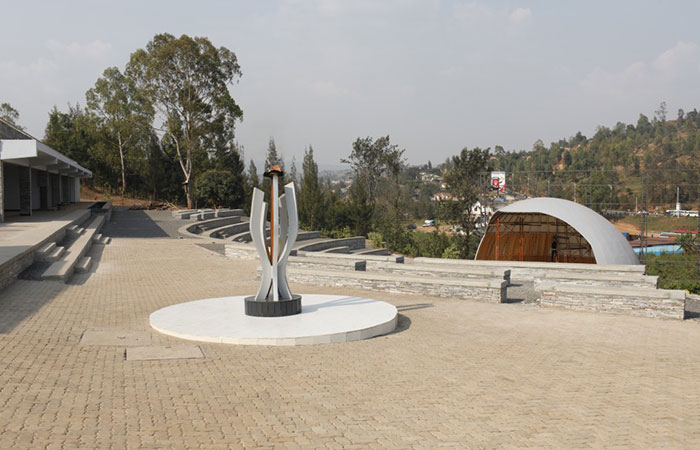
Most Rwanda itineraries begin and end in Kigali, and that is by design rather than necessity. Built across a series of green hills, Kigali is one of Africa’s cleanest and safest capitals and has developed a genuine culinary scene, a growing contemporary art movement, and a network of craft markets and cooperatives selling textiles, basketry, and jewelry made by local artisans. No visit to Rwanda is complete without time at the Kigali Genocide Memorial, which documents the events of 1994.
From there, the mood shifts easily, with gallery visits at spaces like Inema Arts Center, an afternoon at a local Kimironko market, a stroll at Nyamirambo Women’s Center, or an evening trying Rwandan coffee and contemporary East African cuisine at one of the city’s growing number of restaurants and rooftop bars.
Kigali’s accommodation options match its cosmopolitan feel, from internationally branded hotels to boutique guesthouses in leafy residential neighborhoods, most within easy reach of the airport. For first-time visitors, a day or two in Kigali is the ideal way to settle in, understand the country’s history, and build anticipation before heading into the parks.