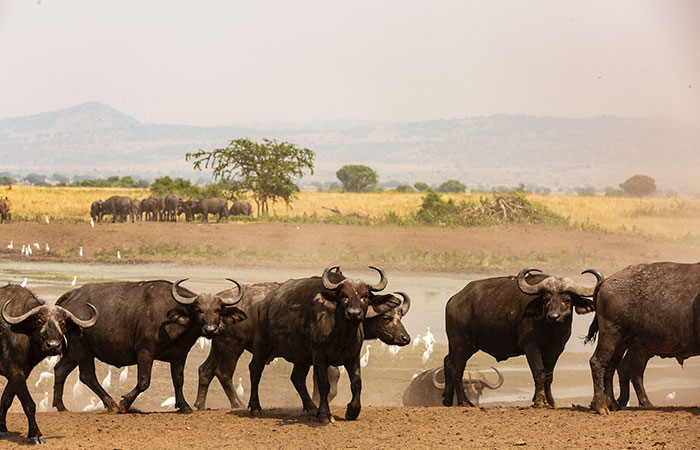
Masai Mara National Park is located in the southwest of Kenya. The Masai Mara is a diverse area that is home to millions of creatures. The word ‘Masai’ comes from one of the largest nomadic warrior groups in Kenya, that is the Maasai, while ‘Mara’ refers to a predominant shrub, flat-topped acacia trees, and bushes that cover most of the area. The Masai Mara is a habitat for both small and big animal species. The ‘Big Five’ game that is the lion, African elephant, leopard, rhino, and buffalo can be seen roaming around the Masai Mara.
Every year, tourists from all over the world travel to the Masai Mara to witness the great migration. This simply involves large herds of wildebeest, zebras, and gazelles jumping and crossing the muddy water of the Mara. They cross the river and travel eight hundred kilometres through the Masai Mara ecosystems in search of greener, mineral-rich pastures. The herds, of course, have to meet up with predators like the crocodiles and the hippos, hence the migrations end up being survival of the fittest. The positive thing about the Masai Mara is that it has lots of wildlife each year, so the ecosystem needs a little bit of balancing.
An activity you wouldn’t want to miss in the Masai Mara is hot air ballooning. This is a chance to get to view the amazing landscape. It is more breathtaking when you get to view the great migration from above. Other propounding views to catch sight of while on the hot air balloon would be watching lions hunting their prey, having a glimpse of leopards perched up high in trees, and seeing active hyena dens. You also get to enjoy a cup of coffee, tea, or any other drink of your choice together with some fantastic snacks as you view the magical nature.
It will not be fair to set foot in the Masai Mara without taking an interest in the Masai cultural encounters. Get to learn about the Maasai families that have lived in the Masai Mara for over hundreds of years, passing their culture from one generation to another generation. Get to visit their camps and gain knowledge about their lifestyle. The Maasai community is made up of about forty-eight houses surrounding their cattle kraal in order to offer security from invaders and thieves who may attempt to steal. The traditional houses ‘manyattas’ are built with mud and branches in a circular arrangement, hence providing a cool environment inside away from the scorching sun.
What makes Masai Mara national park famous?
The Mara is renowned for delivering exceptional big cat (lion, leopard, and cheetah) sightings. Cheetahs are particularly well adapted to the region’s flat plains, which makes the Masai Mara one of the best places to see these nimble predators.
It also hosts the Great Migration, which secured it as one of the Seven Natural Wonders of Africa, and as one of the ten Wonders of the World. This Wildebeest migration takes place at different times of the year, and in the Maasai Mara national reserve, this migration takes place during July to September when the wildebeest cross to the Maasai Mara reserve in Kenya through the Mara River, which is considered the climax of the migration period.
The migration is not a singular, isolated event. Instead, the phrase describes the constant movement of over 1.6 million wildebeests and hundreds of thousands of great zebras, as well as elands and gazelles. As with other wildlife, the purpose of the movement is the search for pasture and water. When supplies of these vital resources are depleted in one area, the animals move to another area where water, grasses, and other food sources are plentiful.
This Great Wildebeest Migration arriving from the Serengeti is also due to the weather patterns and the cycle of the rainy and dry seasons, which brings the greatest influence on the wildlife movement. Because rainfall and weather are somewhat unpredictable, there is no way to calculate concretely where the animals will be at any point in the year, nor how long they will remain in one area.
Breath-taking at any time of the year, the Masai Mara reaches its peak in July and August during the annual migration of the millions of wildebeest and other grazers from the adjacent Serengeti National Park as the herds make their journey into the Mara on trek commonly known as the Great migration. This is arguably the most spectacular wildlife show on the planet, and booking one of the various Masai Mara tours with Umarella voyage safaris registered company in Uganda operating allover east Africa at this time of the year, is something you do not want to miss on your Safari in Africa.
Wildlife in Masai Mara National Reserve
Wildlife viewing in the Masai Mara is good throughout the year. The best months for the wildebeest migration are September and October. June to October is relatively dry and offers the best general wildlife watching.
Maasai Mara National Reserve is one of the major parks in Kenya. This is an area of preserved savannah wilderness on the south-western side of Kenya. The Masai Mara borders the Serengeti along the Tanzanian border. Masai Mara animals include lions, cheetahs, elephants, zebras, and hippos.
You can see the Masai Mara Animals while on a game drive or while on the spectacular hot-air balloons. Walking safaris are also available for those who are looking for a more personal experience in the world. While this is not allowed in the reserve, the conservancies and ranches offer these guides.
Other Masai Mara Wildlife: Giraffe, Silverback Jackal, Hyena, Warthogs, Vultures, Leopard, Secretary birds, Hornbills, Crowned cranes, and Ostriches. The national reserve also hosts a big population of birds, including endemic species, savannah species, and forested species.
These include Ostrich, grebes, Pelicans, cormorants & darter, Herons, egrets & bitterns, Hammerkop and shoebill, storks, Ducks and geese, Secretary bird, Vultures, Eagles, kites, harriers and hawks, among others.
The best time for birdwatching in the Masai Mara National Reserve is throughout the year (it is possible through all the year), but for a great birding experience is in the month November to April, when there are migratory bird species in the park, and June to October, when the Reserve experiences dry season and the grass is short, offering you uninterrupted views of the colorful bird.
How to best Explore Masai national PArk
Exploring the best of Masai Mara National Park Reserve with shoebill Safaris Uganda gives you a great range of experience through different Safari activities at the Reserve, hence were making your African trip more Remarkable. We offer our guests a wide range of the best selected safari activities that are done within the Reserve. You can explore these activities by our cars, guided foot walks, or horse Riding.
Game drive in Masai national Reserve
These game drives are the key activities carried out by Umarella Voyage Safaris in most of the East African National Parks. We do these game drives the whole day, half day, or at night, and the Masai Mara is among the few national parks that allow night game drives. You will have a chance to spot all the wild species in the reserve through our strong, open-roofed cars that give the best view of the animals.
You can also opt to have a nature walk through the Reserve that is led by our game rangers. On top of viewing wildlife through nature walks, you will get a chance to have cultural tours, visit the locals, and see the true African setup of traditions with the Maasai culture.