
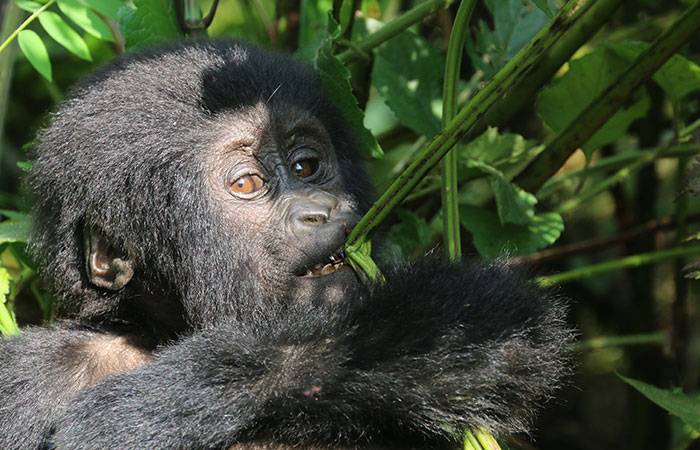
Why gorilla trekking in Uganda over Rwanda? Uganda is a landlocked country characterised by beautiful, extensive valleys, terrains, lakes, and streams. It is the home of half of the world’s population of great apes, the mountain gorillas. What makes Uganda so exceptional in the world is its outstanding variety of wildlife. This is a small, beautiful country, and it’s popularly known as the home of half of the world’s remaining mountain gorillas, the critically endangered species of the gentle giants located along the mountain southern borders of Rwanda. Democratic Republic of Congo.
The majestic Bwindi Impenetrable Forest National Park and nearby Mgahinga Gorilla National Park are some of the gorilla protected areas in Uganda, an African and remaining central tropical rainforest and the home to Uganda’s remaining mountain gorilla population.
The way to see gorillas is to purchase a gorilla permit through a trusted tour company from the Uganda Wildlife Authority. The park is accessible by vehicle from Entebbe International Airport by a 9-hour drive from Kampala city to Bwindi or Mgahinga Gorilla National Parks, or from Kigali Airport in Rwanda, which takes a 4-hour drive. Many visitors to Uganda’s wildlife long safari choose to do gorilla trekking in Uganda, enjoying the magnificent variety of amazing scenery en route.
In the morning exposure you will be led by ranger guides into the dense, fully rainy forest. You hike along a narrow and winding footpath, and due to rain, it is slippery and often steep. With a round-trip hike that can take 6-8 hours from here, you need some walking and physical fitness, but you can usually request a short hike. The most important sign for making a close call will be distinct calls that will bring you out of the forest
As you approach the profound familiarity and intelligent mountain gorillas that live mostly in sweetness and kindness, everybody’s experience is very unique. But gorillas generally don’t pay much of the attention and remain in their business. You are likely to see young ones playing and the mothers taking care of their babies, and your presence is slightly observed by male silverbacks who take control of the family at times. Gorillas may come close and switch, but don’t panic; just follow the rules given by the ranger guides, and the activity takes 1 hour unless you opt to go for gorilla habituation, which takes 4 hours
You are often guaranteed to see gorillas on your gorilla trek in Uganda, and they completely live in the wild, but a 100% guarantee can’t be given to you, although they can be closely monitored by the Uganda Wildlife Authority rangers, and your likely would to see them is very high.
Gorilla trekking is not dangerous; there is no recorded incidence of serious attacks on visitors by gorillas on the trek despite having the strength to fight other wild animals. It is important to know that mountain gorillas whose trek is optimised for visitors have become habituated to the presence of humans. This process is slow and gentle for the gorillas to become accustomed to humans for more than two years, and on your gorilla trek, your ranger guides give you rules to follow because they go deep to understand their behaviours. Uganda, like the nature of East Africa, is governed by four seasons, and these are in two ways: the wet season and dry season
From December to January and June to September is the best time to see gorillas, but you can also see gorillas in the wet season. Mountain gorillas live in tropical rainforests, and they can never be dry, and mountain gorillas don’t migrate. Visitors can see mountain gorillas all year round, and we highly recommend booking a gorilla permit any month and doing your gorilla trekking
Mountain gorillas face pressure from human activities, conflict, and poaching. Mountain gorillas became extinct in the 1980s, with fewer than 620 individuals, and today the mountain population is steadily increasing to over 1000 individuals; sustainable tourism has been decisive in this trend. As of 2018, the ISCAN and even this have reversed the mountain gorilla population from critically endangered to endangered.
But mountain gorilla conservation and habituation, the increase of gorilla population, and the creation of gorilla parks displaced the Batwa from their ancient forests where they lived, and this was done by the Uganda government and UNESCO
Batwa were the first people who lived in what is today the Bwindi Impenetrable Forest. They were the Batwa pygmies, who are the indigenous people of the rainforest, and this forest provided everything they needed
I would recommend your gorilla trekking safari in Uganda rather than Rwanda because the gorilla permits in Rwanda are more expensive than the ones for Uganda, which are sold at $700, and Uganda has more than 20 habituated gorilla families ready for trekking and half of the world’s population. Rwanda, and this puts Uganda in more chances and offers a good chance for gorilla trekking.
You can also participate in different activities that reward visitors with authentic experiences, like Lake Bunyonyi, Queen Elizabeth National Park for game viewing, hiking Mount Rwenzori, Jinja City to see the source of the River Nile and do whitewater rafting, and Murchison Falls National Park for amazing boat and wildlife game viewing
For booking and enquiries, call